
The History of Water Pumps: 4,000 Years of Innovation from Ancient Water Lifters to Smart Pumps

Water pumps are among humanity's most important engineering inventions. For more than 4,000 years
they have enabled civilizations to transport, distribute, and manage water efficiently for agriculture, drinking water, sanitation, mining, industry, and modern infrastructure.
From simple manual water-lifting devices used by ancient civilizations to today's AI-ready Smart Pumps equipped with IoT connectivity, permanent magnet motors, and variable-speed inverter technology, the evolution of water pumps reflects thousands of years of engineering innovation.
This article explores the complete history of water pumps and how they became one of the most essential technologies powering the modern world.
Where Did Water Pumps Originate?
The earliest concepts of pumping water date back to approximately 2000 BC, when ancient civilizations sought efficient ways to move water from rivers, lakes, and wells for irrigation and daily use.
Several civilizations independently developed early water-lifting mechanisms that laid the foundation for modern pumping technology.
Ancient Egypt: The Shaduf
One of the earliest water-lifting devices was the Shaduf, developed in Ancient Egypt.
The Shaduf used a counterbalanced lever to lift water from the Nile River into irrigation canals, significantly improving agricultural productivity.

Mesopotamia: Water Wheels
Ancient Mesopotamians developed rotating water-lifting wheels that continuously transferred water from rivers to higher ground.
These systems greatly increased irrigation capacity and supported the growth of early cities.
Ancient China: Chain Pumps ( The History of Water Pumps)
Chinese engineers introduced the Chain Pump, a continuous-loop mechanism that transported water efficiently for irrigation and flood management.
Chain pumps became widely used across Asia and remained in service for centuries.
Although none of these systems resembled today's electric water pumps, they established the engineering principles that inspired future pump technologies.
Who Invented the First Modern Water Pump?
Around 300 BC, Greek inventor Ctesibius of Alexandria revolutionized hydraulic engineering by inventing the Piston Pump.
This invention is widely recognized as the foundation of the modern positive displacement pump.

Why Was the Piston Pump Revolutionary?
The piston pump introduced several engineering breakthroughs:
High-pressure water delivery
Controlled water flow
One-way valve technology
Mechanical suction and discharge principles
Many industrial positive displacement pumps today still operate using concepts pioneered by Ctesibius more than two millennia ago.
Water Pumps During the Roman Empire
By approximately 100 AD, the Roman Empire further improved piston pump technology.
Water pumps became critical infrastructure supporting:
Urban water supply systems
Mining operations
Firefighting equipment
Agricultural irrigation
For the first time in history, pumping technology became an integral part of large-scale public infrastructure.
The Renaissance and Fluid Engineering
During the 15th and 16th centuries, scientists began studying fluid mechanics systematically.
Among the most influential figures was Leonardo da Vinci, whose research into water movement, hydraulic machines, and fluid behavior helped establish many of the engineering principles used in modern mechanical and hydraulic engineering.
His work inspired generations of engineers to improve pump efficiency and hydraulic system design.
How the Industrial Revolution Changed Water Pumps
The 18th-century Industrial Revolution dramatically accelerated water pump development.
Steam-powered machinery created enormous demand for reliable pumping systems capable of operating continuously.
Water pumps became indispensable in:
Coal mining
Municipal water supply
Manufacturing plants
Large irrigation projects
Without advances in pumping technology, industrialization would have progressed far more slowly.
The Birth of the Centrifugal Pump
Today, the centrifugal pump is the world's most widely used type of water pump.
Denis Papin's Early Concept (1687)
French physicist Denis Papin first proposed the concept of a centrifugal pump in 1687, although manufacturing limitations prevented practical implementation.
John Appold's Breakthrough (1851)
In 1851, British engineer John Appold significantly improved centrifugal pump efficiency through an optimized curved impeller design.
His pump demonstrated exceptional performance at the Great Exhibition in London and quickly gained worldwide recognition.
This innovation established the centrifugal pump as the industry standard.
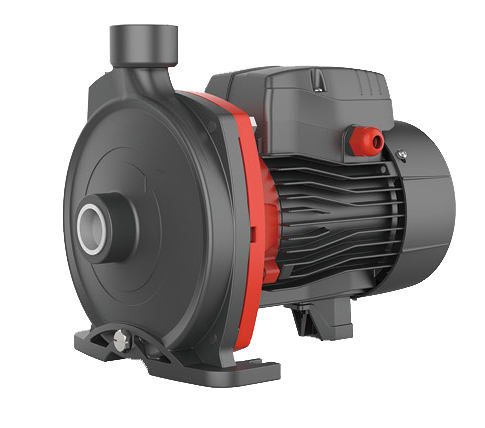
How Does a Centrifugal Pump Work?
A centrifugal pump operates using a rapidly rotating impeller that converts mechanical energy into hydraulic energy.
The basic operating process includes:
Water enters the pump inlet.
The impeller accelerates the water.
Velocity energy is converted into pressure inside the volute casing.
Pressurized water exits through the discharge outlet.
Because of their simplicity, reliability, and high flow capacity, centrifugal pumps are now widely used in residential, commercial, industrial, and municipal applications.
The Electric Motor Revolution
The late 19th century marked another major milestone with the widespread adoption of
electric motors.
Electric motors transformed the pump industry by making pumps:
Smaller
More efficient
Easier to install
More reliable
Suitable for continuous operation
This era introduced many modern pump categories, including:
Residential water pumps
Submersible pumps
Borehole pumps
Multistage pumps
Booster pumps
Industrial process pumps
What Is a Smart Pump?
In the 21st century, water pumps entered the digital era.
A Smart Pump integrates advanced electronics, sensors, and intelligent control systems to optimize performance while minimizing energy consumption.

Core Smart Pump Technologies
Modern Smart Pumps commonly include:
Permanent Magnet (PM) high-efficiency motors
Variable Speed Drives (VSD)
Inverter technology
Real-time pressure sensors
Flow sensors
IoT connectivity
Mobile app control
Cloud monitoring
Predictive maintenance
Smart Building integration
Instead of operating at full speed continuously, Smart Pumps automatically adjust motor speed according to real-time water demand.
The result is significantly lower electricity consumption, quieter operation, longer equipment life, and improved system performance.
Water Pump Evolution Timeline
Period | Major Innovation |
Around 2000 BC | Ancient water-lifting devices |
Around 300 BC | Piston Pump invented by Ctesibius |
Around 100 AD | Roman hydraulic systems |
1687 | Denis Papin proposes centrifugal pump |
1851 | John Appold develops the modern centrifugal pump |
Late 19th Century | Electric motor water pumps |
20th Century | Residential and industrial pump expansion |
21st Century | Smart Pumps, IoT, AI monitoring, inverter technology |
Modern Applications of Water Pumps
Today, water pumps are essential across virtually every industry.
Common applications include:
Residential water supply
Commercial buildings
Municipal water systems
Agriculture and irrigation
Manufacturing
Wastewater treatment
HVAC systems
Fire protection systems
Solar water pumping systems
Data centers
Smart Buildings
Industrial process systems
As global demand for energy efficiency and sustainable water management grows, pump technology continues to evolve rapidly.
Why Smart Pumps Are the Future
Global trends toward sustainability, carbon reduction, digital infrastructure, and intelligent buildings are driving widespread adoption of Smart Pumps.
Key Benefits
Lower energy consumption
Reduced operating costs
Precise pressure control
Longer equipment lifespan
Predictive maintenance capabilities
Remote monitoring
Integration with Smart Building systems
Support for ESG and carbon reduction initiatives
For residential, commercial, and industrial facilities alike, Smart Pumps deliver measurable improvements in both operational efficiency and lifecycle costs.
Conclusion
The history of water pumps spans more than 4,000 years, from simple manual water-lifting devices used by ancient civilizations to today's intelligent Smart Pumps powered by inverter technology, IoT, and digital automation.
Although the fundamental purpose remains unchanged—moving water from one place to another—the technology behind modern water pumps has evolved dramatically.
Today, water pumps are indispensable to homes, agriculture, commercial buildings, industrial facilities, municipal infrastructure, renewable energy systems, and smart cities. As engineering advances continue, Smart Pumps will play an increasingly important role in creating sustainable, energy-efficient water management systems for future generations.
Frequently Asked Questions (FAQ)
When were water pumps first invented?
Early water-lifting devices appeared around 2000 BC, developed by ancient civilizations such as Egypt, Mesopotamia, and China.
Who invented the first modern water pump?
Ctesibius of Alexandria invented the Piston Pump around 300 BC, laying the foundation for modern positive displacement pumps.
What is a centrifugal pump?
A centrifugal pump uses a rotating impeller to convert mechanical energy into water pressure. It is the most widely used type of pump worldwide.
What is a Smart Pump?
A Smart Pump combines variable-speed inverter technology, permanent magnet motors, IoT connectivity, sensors, and intelligent controls to optimize performance while reducing energy consumption.
Why are Smart Pumps more energy-efficient?
Smart Pumps automatically adjust motor speed according to real-time water demand, eliminating unnecessary energy consumption and reducing electricity costs while extending equipment life.
For More Information
Tel. 02-292-1067-70
Youtube : Leopump ประเทศไทย
Line Official : @775ruust
Facebook : LEOpumpThailand
TikTok : Leopumpthailand



ความคิดเห็น